Remember last week when I broke down Thoughts, Feelings, Emotions, and Facts?
Well, we’re going to build off that, starting with what I believe to be the most critical building block in this chain for those like me. By that, I mean my fellow neurodivergent women who have big feelings, but have conditioned ourselves to dissociate from them and instead intellectualize them.
Growing up, I was nicknamed Waterworks, Crybaby, and Crocodile Tears; I was described as too sensitive or too emotional.
The reality is that I am what neurolinguistics (the science I am trained in and am continuing to train myself in to be a better life coach) labels as a kinesthetic.
I like to make decisions based on gut feelings or whether something feels right; I would rather wear clothes that feel good and comfortable than look good.
I often have to rewind my brain to understand how I reached a conclusion or unearth the logic behind an undeniable strand of intuition. This applies to my instincts towards people, my opinions on a subject, and someone’s intentions.
After discovering my autism, some may call it pattern recognition. My husband calls it Livtuition.
To me, though, it’s far more than that.
It’s my inner voice—my higher consciousness—guiding the way to things that can’t always be rightfully explained.
From a young age, I felt and just knew things I couldn’t explain.
I felt people’s ever-changing energies, vibrations, and moods; I felt that humans are more than flesh and bone.
Pair that sense with a heightened, AuDHD nervous system, unpruned neuron synapses, big feelings, and the vocabulary of an adolescent, and the result?
The things I felt were a full-body, all-consuming experience and terrifyingly overwhelming. All I could do to express myself was cry.
In time, I learned that my bouts of tears were an inconvenience to the people around me; I could feel their discomfort, frustration, and impatience on top of the overwhelming tears I shed.
I began disconnecting my mind from my physical body, suppressing the feelings that came with the emotions that regularly flooded my body, so I could just get through. And I didn’t want to burden or inconvenience anyone; I certainly didn’t like sitting with the feeling of other people’s discomfort.
I wanted to feel those good feelings and moods from people because it made my survival easier.
The result?
I was a walking pressure cooker. I did not feel my own emotions; I was more concerned with micro-managing the emotions of those around me.
And it was a vicious, vicious cycle.
The more I focused on other people’s feelings, the more feelings that got suppressed in me, and the more explosive my crying became; the less I let myself feel as it came, the more I had to get out those few times I did let the pressure cooker off.
My mom often referred to them as crying spells—I now know they were autistic meltdowns.
I did, however, intellectualize the absolute piss out of my “feelings”.
I went to therapists and could explain the logic behind what, how, and most specifically why something made me “feel” the way it did. I shared my “feelings” in beautiful stanzas of visual prose. To an outsider, I was so goddamn in touch and analytical with my feelings that it was awe-inspiring.
But it was always from an arm’s length, like an observer watching a movie of my emotions rather than stepping into the lead role.
At a certain point, the dial on my pressure cooker of a nervous system couldn’t contain it on its own. I turned to alcohol to dull the expansive, constant pressure inside of me. I got sick at least once a month. And I was chronically fatigued.
I faked a smile and continued forcing positivity, but the reality is that each day that passed, it got worse and worse until the InstaPot of my life imploded.
Flash forward to more recently, when I was about six months into sobriety and a few months into working on myself and starting my coaching business.
The instructor said, “You need to start feeling more,” stretching out the word “feeling” like taffy for emphasis as if I didn’t know what it meant.
Frankly, when she said that to me, I was fucking pissed.
Me? Need to feel more?
No, nooooo sir! My problem was that I “felt” too much! I needed to “feel” less! I needed to get out of my cesspool of emotions and feelings!
Well, a month or so later, I was reading The Body Keeps the Score when I read the following excerpt from the section titled ‘Befriending the Body’:
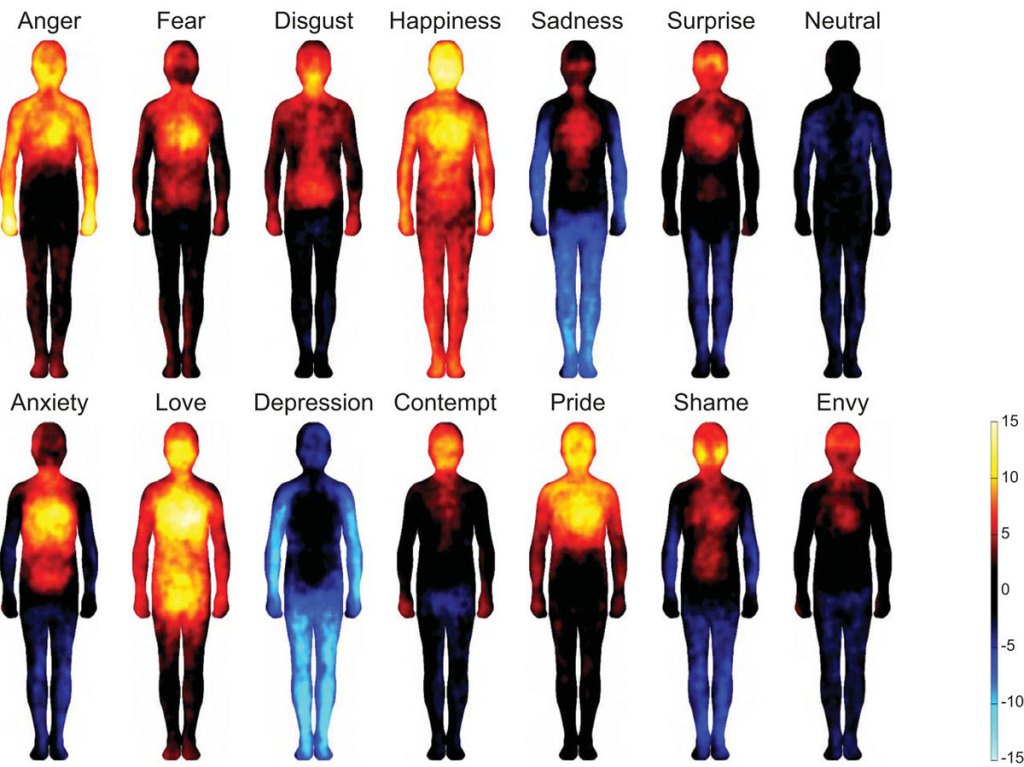
“In my practice I begin the process by helping my patients to first notice and then describe the feelings in their bodies—not emotions such as anger or anxiety or fear but the physical sensations beneath the emotions: pressure, heat, muscular tension, tingling, caving in, feeling hollow, and so on.”
It was like the gears of my brain clicked into place, and I finally understood what that instructor meant—I needed to feel more physically. I needed to stop intellectualizing, analyzing, and creating a thesis statement and let my body experience the physical sensations I had denied for over twenty years.
Remember our definition from last week for feeling?
Feelings: Feelings contains the precise word that defines this word—feel. Feelings are physical, somatic sensations within the body, like your chest tightening and your stomach feeling queasy when you feel anxious, or your face getting warm and your shoulders getting tense when you get angry.
When I started working on this, I noticed something peculiar: all my feelings felt the same—tightness in my chest and shoulders, and weight on my heart. I had suppressed so many physical feelings in my life that I had taught myself to feel only one thing: fear of feeling.
You know what happens when you fear feeling and you’re hit with shit ton of feelings—both yours and others? You kick into fight or flight, exploding from the sheer overwhelm that fear brings.
In my case, I had autistic meltdowns and cried uncontrollably.
However, whenever I worked to allow feelings, I repeatedly told myself I am safe. (Remember how thoughts influence emotions and then feelings in my blog, Spring Clean Your Mind? Well, in time, my feelings pushed past that fear because I was producing different emotions from new, intentional thoughts!)
And feelings started to come, and they continue to come and grow. The other day, I felt annoyance in my jaw and excitement in my stomach, and I had the most two-minute cathartic cry when I experienced shock and disappointment.
The craziest part of all of this?
I’ve realized that feeling feels damn good—and not just the “good” emotions! Sometimes, allowing myself to feel the mucky ones—sadness, devastation, despair, jealousy, etc.—is about the most magical thing.
Like that cry I mentioned above? It was calm, short, and relieving. I felt ready to kick ass and take names for the rest of my day; I felt empowered after crying!
Now, I haven’t just been allowing feelings willy-nilly; I’ve been intentional about it, imploring various tools that I’ve learned through education and 1:1 coaching. These tools have changed my life.
If you relate to my story, sign up for one of my FREE upcoming group coaching sessions (see post titled “Exceptional Living Sessions” or email me at livexceptional@outlook.com) to learn more about how I can help you learn and master these tools and change your life.
Also, don’t forget to hit SUBSCRIBE below so you don’t miss the continuation of this “Thoughts, Emotions, Feelings, Facts” series!
 Exceptional Living
Leave a comment